IThe Host's Preface
In which the reader is told what he has come for, and what it will cost.
You have come here for one of three reasons. You have had an experience — a pen that moved, a board that spelled, a voice in a church, a dream with a message — and you want to know whether it was anything. Or you have not, and you want to. Or somebody you love is doing it, and you are afraid. Your Host welcomes all three, because all three are the same person at different hours of the night.
Here is what he will give you. The whole history, which has never been put in one place, because the churches keep their half and the séance-rooms keep theirs and neither will admit that the Pythia, Pentecost, the Ursulines of Loudun, Mrs. Piper of Boston and the woman in Tacoma with the seven-foot Lemurian are one phenomenon in different clothes. The science, which is better than either side lets on and settles less than either side claims. The method, in three forms — the planchette, which I make and prefer; the pencil, which you own; and the keyboard, which you are touching — written as instructions and not as mood. And the warnings, which are the part of every book on this subject that the author leaves out, because the warnings are where the sales stop.
What it will cost is a decision you must make before you scroll: that you will not decide. Not tonight. The believer and the sceptic both arrive at the table knowing what will happen, and both are right, and both go home with nothing. The state that everything on this page depends on is the state of not knowing, held for twenty minutes, in a closed room, with a clock. Your Host has held it for a great deal longer than that, and he is still here, and he is still not sure. He has come to regard that as the finding.
IIThe Words, and the Difference Between Them
Seven words for one thing, sorted by who is supposed to be talking.
The trade uses these words as if they were interchangeable and the churches use them as if they were opposites. They are neither. They are one act — a person speaks or writes what they experience as not their own — sorted by three questions: who is held to be speaking, to whom, and through which part of the body. Keep the three questions; they will carry you through the rest of the page.
| The word | Who speaks | To whom | Through what | The Host's note |
|---|---|---|---|---|
| Prayer | You | the god | words, silence | The call going out. Every religion has it; most say nothing about what to do if the line is picked up. |
| Prophecy | the god | the people | a mouth | The line coming back with a message for everybody. Saul stripped naked for it. Delphi charged for it. |
| Glossolalia | the Spirit | nobody in particular | a mouth, no language | Tongues. Syllables without a dictionary, spoken in joy. Paul allowed it in church, two or three at a time, with an interpreter. |
| Possession | a spirit | the body's owner, displaced | the whole body | The tenant moves in. In Haiti a sacrament, in Loudun a crime, in a Munich hospital a diagnosis. |
| Trance mediumship | a control | the sitters | a mouth, in a parlour | Victorian and later: the medium goes under, a personality with a name and a manner speaks, the sitters take notes and pay. |
| Automatic writing | the subliminal self, or a guest | the writer, later | a hand, a pen, a planchette, a keyboard | The line comes in through the hand rather than the mouth, which means it can be kept, dated, and read cold. The form I favour, for that reason. |
| Channeling | an entity | an audience, usually paying | a mouth, on a stage, since 1977 | The trance medium rebranded for the New Age: the dead replaced by ascended masters and 35,000-year-old warriors. Same machinery, larger fees. |
Notice what the table shows. Prayer is the only entry in which the human is the one talking. Every other word describes the reply. Religions are, without exception, very detailed about how to make the call and very nervous about what to do if it is answered; the answered call is either the founding miracle of the faith or the thing the faith exists to suppress, depending on the date. This site is about the reply, in all its forms, and its position is that the forms are one.
IIIThe Deep Past
From the cave to the tripod: the state is older than the gods it was used to reach.
Before there was a word for it there was a wall, a quarter of a mile inside a mountain, with a dancing thing on it that was partly a man. Your Host begins there because everything after is a footnote to it: the technique of leaving the body and coming back with something to say is older than agriculture, older than writing, older than any god whose name survives, and it has never once, anywhere, gone out of use.

The Sorcerer of Trois-Frères
c. 13,000 BC, Ariège, FranceFifteen thousand years before anyone wrote anything down, somebody crawled a quarter of a mile into a cave and, four metres up the wall of its innermost chamber, engraved a figure with the antlers of a stag, the eyes of an owl, the beard of a man, the paws of a bear and the tail of a horse, dancing. The Abbé Breuil, who copied it in the 1920s, called it the Sorcerer. Whether it is a god, a costumed man, or a man who has become something else while wearing the costume is the entire subject of this site in one picture. The people who painted the caves were, by every ethnographic parallel that survives, people whose specialists went into trance and came back speaking for the animals.
The Shaft at Lascaux
c. 17,000 BC, DordogneAt the bottom of a shaft in the most famous painted cave in the world: a disembowelled bison, a bird on a pole, and a man with the head of a bird, stiff, erect, falling backward. It is the only human figure at Lascaux and it is not a hunting scene. The most economical reading is the shamanic one: the bird is the soul-bird of every Siberian and American account, the stiffness is the trance, the man is not dying but gone somewhere. It is the first depiction of the state this site is about, and it is seventeen thousand years old.

The word itself
1692, AmsterdamThe word shaman is Tungus, from the Evenki of eastern Siberia, and reached Europe in the report of the Dutch statesman Nicolaes Witsen, who printed the first picture of one and labelled it 'Priest of the Devil'. The Siberian pattern is the template for everything that follows on this page: a calling that arrives as an illness, a death-and-dismemberment in vision, a drum, a costume, and a journey in trance to the upper or lower world, from which the shaman returns with the animals' terms, the sick soul, or the answer. Mircea Eliade called it 'the archaic technique of ecstasy' in 1951 and the phrase has stuck.
The drum
SiberiaThe instrument is a horse. The shaman rides the drum's rhythm out of the body; the beater is the whip. Every technique on this site has a drum somewhere in it: the tambourine of Saul's prophets, the timbrel of the maenads, the organ swell before the tongues break out, the metronome tick of a pencil on paper. Rhythm at roughly the resting heart rate, sustained, is the oldest door there is.
The prophets of Mari
c. 1770 BC, the EuphratesThe royal archive of Mari, burned by Hammurabi and thereby preserved, contains some fifty letters reporting to King Zimri-Lim what the gods have said through people. Two job titles appear: the āpilum, the 'answerer', who delivers oracles on request, and the muḫḫûm, the 'ecstatic', who goes into a fit in the temple and speaks unbidden. The letters are bureaucratic — officials forward the message, note whether they took a lock of the prophet's hair and a hem of his garment as surety, and add their own opinion of his reliability. Channeling, then, arrives in history already regulated, already doubted, and already filed.

The boy at Byblos
c. 1075 BCThe Egyptian envoy Wenamun, stranded in Byblos and being refused an audience, records that while the prince of Byblos was sacrificing to his gods, 'the god seized one of his youths and made him possessed', and the boy cried out: 'Bring up the god! Bring the messenger who is carrying him!' It is the earliest description of ecstatic prophecy outside the Bible, and its structure is already complete: an unremarkable person, a public ritual, a seizure, a message in the first person from the god, and a change of policy on the strength of it.

Is Saul also among the prophets?
c. 1000 BCThe first king of Israel meets 'a band of prophets coming down from the high place with a harp, a tambourine, a flute and a lyre before them, prophesying', and the spirit of God comes on him and he prophesies with them, 'and he was turned into another man'. Later, pursuing David, he is seized again, strips off his clothes, prophesies before Samuel and lies naked all that day and all that night. Whoever wrote that down did not think it was dignified. They recorded it anyway, because it was what prophecy looked like: music, a group, contagion, and the loss of the self in public.

The witch of Endor
c. 1000 BCThe same Saul, on the night before his last battle, having 'put away those that had familiar spirits, and the wizards, out of the land', disguises himself and goes to a woman at Endor who has one, and asks her to bring up Samuel. She does. Samuel, displeased at being disturbed, tells the king he will be dead by tomorrow, and he is. It is the first séance in Western literature, with every part in place — the medium, the sitter in disguise, the control, the bad news — and the text does not say it was a fraud. It says it was forbidden, and that it worked. The Church spent fifteen centuries deciding which of those to emphasise.

The Pythia
c. 800 BC – AD 390, DelphiFor twelve centuries the most consulted human being in the Mediterranean was a woman from the village below the temple of Apollo, past childbearing, seated on a bronze tripod over a cleft in the floor of the inner sanctuary, chewing laurel, inhaling something, and speaking. Kings sent to her before wars. Colonies were founded where she said. Plutarch, who was a priest there, describes one session in which the Pythia was forced to prophesy on an unfavourable day, became hoarse and wild, rushed screaming from the shrine and died within days. In 2001 geologists found ethylene, a sweet-smelling anaesthetic, in the spring water at the intersection of two faults beneath the temple; whether there was ever enough of it to matter is still argued. It does not much matter. A room, a smell, a ritual, an expectation and a woman trained for the job will produce the state without any gas at all.

Aegeus consults Themis
c. 440 BC, Attic red-figureThe only ancient image of a Delphic consultation: the seated prophetess on the tripod, a laurel branch in one hand and a bowl in the other, looking into it; the king standing before her, listening. The bowl is worth noticing. Scrying and speaking were one act.

The Sibyl
Cumae, and everywhereThe other model: not the temple servant but the wandering woman who prophesies unasked, in verse, in a frenzy. Virgil has the Cumaean Sibyl in her cave, 'her breast heaving, her wild heart swelling, and she seemed taller, her voice not mortal, as the god breathed upon her'. The Sibylline Books, bought from her by King Tarquin, were kept in a stone chest under the Capitol and consulted by the Senate in emergencies until they burned in 83 BC; the replacements were destroyed by a Christian general in AD 405. Rome ran the world for five centuries with a channelled text in the basement.

Michelangelo's Delphic Sibyl
1509, the Sistine ceilingThe Church kept the Sibyls. Twelve prophets of Israel and five pagan prophetesses share the vault of the Pope's chapel, because the Sibyls were held to have foretold Christ, and because Rome never entirely stopped believing that the god had once spoken through women in caves.

The maenads
5th century BCDionysus's technique was collective, nocturnal, female, and violent: wine, drums, dance to exhaustion, and the god arriving in all of them at once. Euripides' Bacchae ends with a queen tearing her son apart on the mountain in the belief that he is a lion, and then coming to. The play is a documentary of possession, its ecstasy and its morning after. Plato, in the Phaedrus, lists four kinds of divine madness and ranks them as gifts: the prophetic from Apollo, the ritual from Dionysus, the poetic from the Muses, the erotic from Aphrodite. 'The greatest of blessings come to us through madness, when it is sent as a gift of the gods.'
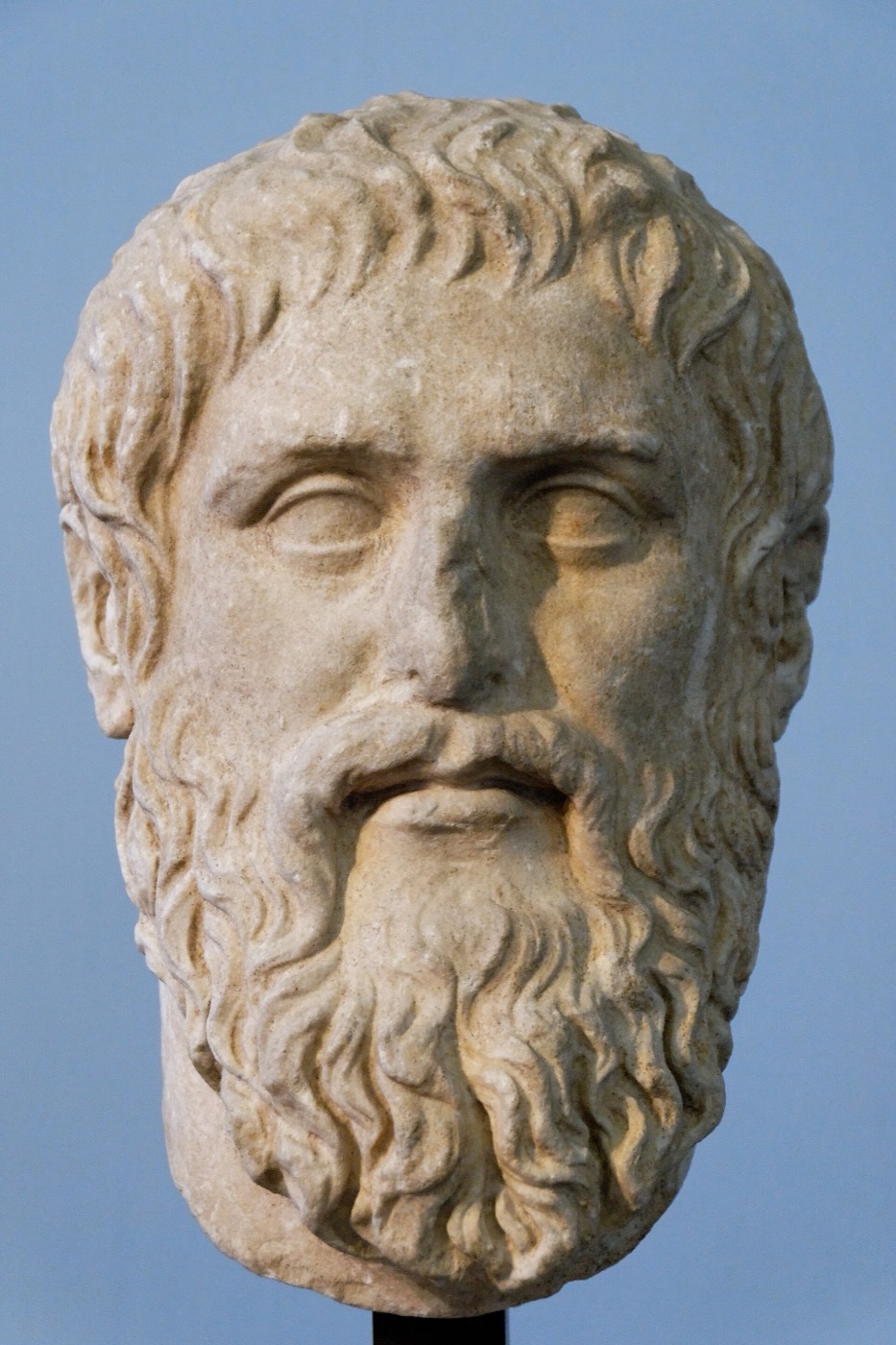
Plato on the poets
c. 380 BCIn the Ion Socrates tells a rhapsode that poets 'are not in their right mind when they compose', that the god takes away their senses and uses them 'as his ministers', and that this is why a man who is nothing much can produce a hymn he could never have written himself. The point is made with a magnet: the god magnetises the poet, the poet the performer, the performer the audience, a chain of iron rings hanging from a stone. Twenty-three centuries later Frederic Myers would call the same thing the subliminal self, and the Surrealists would call it automatism, and this site will call it what it is: the part of you that writes better than you do.

The seers who heard
c. 1500–1200 BC, the PunjabThe Vedas are śruti, 'that which is heard'. The tradition is explicit that the hymns were not composed but received: the rishis heard them, in a state the hymns themselves describe. 'We have drunk soma; we have become immortal; we have gone to the light; we have found the gods.' What soma was is unknown — a mushroom, an ephedra, a lost plant — but the structure is the shaman's: a drink, a vision, a text that comes through rather than from. Hinduism has kept every form of the line open since: the possession-oracles of Kerala, the ecstatic singers of Bengal, the guru who speaks as the god.


IVTongues
The largest channeling practice on earth is Christian, weekly, and in your town.
Six hundred million people belong to churches in which the expected evidence of the Spirit's presence is that you open your mouth and language comes out that you did not compose. It is the most studied altered state in the world and it is the one the New Age never mentions, because it belongs to the wrong people. Here is where it came from and what the instruments say it is.

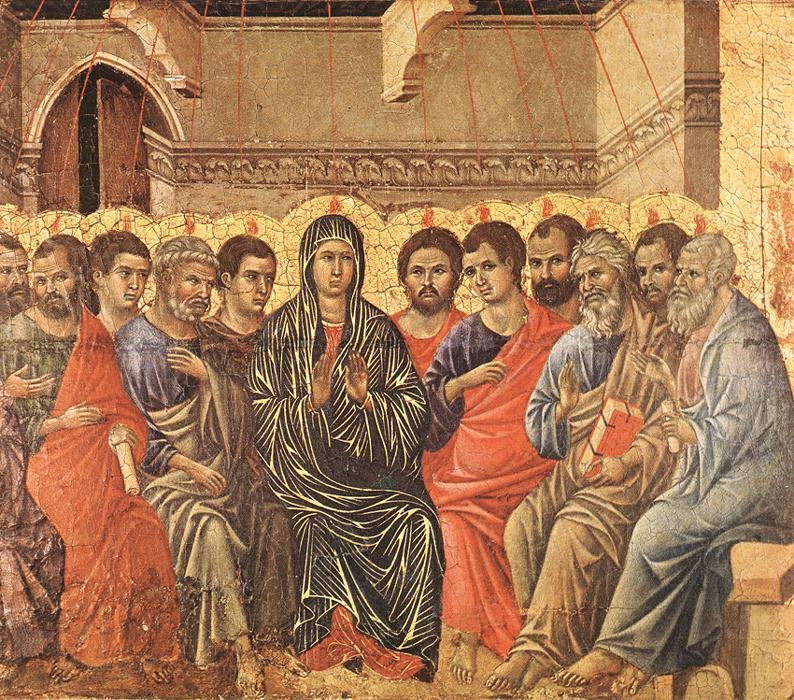
Pentecost
Jerusalem, c. AD 30'And they were all filled with the Holy Ghost, and began to speak with other tongues, as the Spirit gave them utterance.' Fifty days after the crucifixion, in an upstairs room, with a sound like wind and something like fire on each head. The crowd outside — 'Parthians, and Medes, and Elamites' — each hear their own language; some say the apostles are drunk. Peter points out that it is nine in the morning. The event that founds the Church is an outbreak of ecstatic speech, and the first recorded reaction to it is the accusation that always follows: they are drunk, they are mad, they are faking.

Paul's rules
Corinth, c. AD 54Within twenty-five years the Corinthian church was a riot of tongues, and Paul, who says he speaks in them 'more than you all', wrote the first regulations for channeling in Western history: in church, two or at most three, one at a time, and only if someone interprets; if there is no interpreter, 'let him keep silence in the church, and let him speak to himself, and to God'. 'I would rather speak five words with my understanding than ten thousand words in an unknown tongue.' And the line that every séance-room should have painted over the door: 'the spirits of the prophets are subject to the prophets'. The state is not an excuse. You remain responsible.

Montanus and the two women
Phrygia, c. AD 165A recent convert named Montanus fell into ecstasy and spoke in the first person as the Paraclete — 'Behold, man is as a lyre, and I fly over him as a plectrum' — and two prophetesses, Priscilla and Maximilla, left their husbands to join him. The New Prophecy spread across the empire, won over Tertullian, the fiercest Christian writer of the age, and was condemned by synod after synod. The bishops' objection was not that the spirit could not speak, but that it could not be allowed to speak without their permission. It is the first institutional decision that channeling would be tolerated only in the past tense.
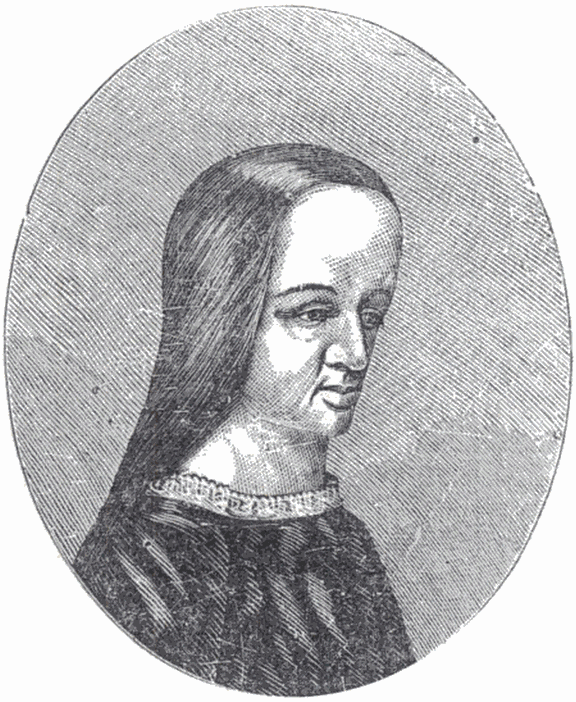
The little prophets of the Cévennes
1688–1710When Louis XIV outlawed Protestantism, the Huguenot peasants of the Cévennes mountains, without pastors, began to prophesy — first a shepherdess of sixteen, then children of six and seven who fell rigid, wept, and preached in perfect French though they spoke only patois. Contagion followed: whole valleys convulsed, and the convulsions fed a guerrilla war. Three of the prophets reached London in 1706 as the 'French Prophets', shook and shrieked in rented rooms, gathered English followers, and announced that one of them, Dr Emes, would rise from the dead in Bunhill Fields on 25 May 1708. A crowd of twenty thousand came to watch. He did not. The movement survived the disappointment, as they always do, and passed its shaking to a Manchester couple named Wardley, whose small society was joined in 1758 by a young woman called Ann Lee.

The Shakers
Manchester 1758 – New York 1774 – AmericaMother Ann Lee's Shakers took the Camisard shaking, added celibacy and celestial cleanliness, and built the most orderly communes in America on a foundation of ecstatic dance and tongues. The 'Era of Manifestations' of 1837–1850 produced automatic 'gift drawings' — tree-of-life diagrams received from spirits by women who had never drawn — and messages from Native American spirits who 'took possession' of the sisters during worship. The Shakers claimed the spirits had merely used them first before going out to the world in 1848; they were, they said, the door the Fox sisters walked through.

Edward Irving and the London tongues
1830–1833The tongues returned to respectable Protestantism in the spring of 1830 in a farmhouse in Port Glasgow, where a dying girl named Mary Campbell spoke in an unknown language and a consumptive named Margaret MacDonald prophesied. Edward Irving, the most fashionable preacher in London, was electrified; by October 1831 his Regent Square church was interrupted mid-sermon by women crying out in tongues, and the newspapers came. He was deposed for it in 1833 and dead at forty-two the year after. His followers founded the Catholic Apostolic Church, which lasted a century and a half on the strength of one autumn's utterances.

Kirtland
27 March 1836At the dedication of the Mormon temple in Kirtland, Ohio, the assembly spoke in tongues, saw angels, and heard 'a sound like the rushing of a mighty wind'. Joseph Smith, who had produced the Book of Mormon by gazing into a seer stone in a hat and dictating, was a channel by every definition on this site, and his church was born in the same atmosphere as spiritualism, twenty years early and a hundred miles west of Hydesville.

Topeka and Azusa Street
1 January 1901 – 1909Charles Parham's Bible students in Topeka, Kansas, had been set to find the evidence of Spirit-baptism in Acts, and on New Year's Day 1901 Agnes Ozman, when hands were laid on her, spoke what was taken for Chinese. Five years later one of Parham's pupils, William Seymour, a one-eyed son of freed slaves, began meetings in a former stable at 312 Azusa Street, Los Angeles. On 18 April 1906, the morning San Francisco fell down, the Los Angeles Times ran 'Weird Babel of Tongues'. From that stable, in three years, came Pentecostalism, which now counts somewhere over six hundred million people and is the fastest-growing religious movement on earth. Every fourth Christian alive is in a tradition that expects ecstatic speech on a Sunday. It is the largest channeling practice in history and it is in your town.

Seymour
1870–1922He kept his head in a shoebox on the pulpit and prayed into it while the room roared. Black and white knelt together in Los Angeles in 1906, which was noticed, and disapproved of, more than the tongues. Parham, his teacher, came to see, was horrified by the mixing, and left. The revival ran without him.

Tongues today
everywhereThe Catholic Charismatic Renewal began at a students' weekend at Duquesne University in February 1967 and now numbers over a hundred million. The Toronto Blessing of 1994 added 'holy laughter', roaring, and falling. The mechanics have been studied more thoroughly than any other practice on this site, and the findings are worth knowing before you try it, because they are not what either side wants.

What tongues are, linguistically
William Samarin, a Christian linguist, recorded speakers on four continents for Tongues of Men and Angels (1972) and concluded: 'a meaningless but phonologically structured human utterance, believed by the speaker to be a real language but bearing no systematic resemblance to any natural language, living or dead'. The syllables are drawn from the speaker's own language, simplified — English speakers produce a lot of sh and l and open vowels, with a rhythm like a lullaby. Felicitas Goodman found the same intonation curve in Mexico, in Appalachia, and in a Japanese sect: a rise, a peak, a fall to a mumble, then again. Nobody has ever recorded a case of a speaker producing a language they did not know that survived examination by a linguist who knew it.
What tongues are, neurologically
In 2006 Andrew Newberg at Pennsylvania put five Pentecostal women in a SPECT scanner, singing gospel and then speaking in tongues. During tongues the frontal lobes — the seat of deliberate control — went quieter, not busier, and so did the language area on the left. The speakers' report that 'it is not me doing it' is, in the narrow sense, correct: the part of the brain that plans speech had stepped back. The same finding turns up in the Brazilian psychographers below. The state is real. What comes through it is another question.
How tongues are learned
Samarin also watched people receive the gift and noticed that it is taught, gently, by people who already have it: relax, open your mouth, praise God aloud, don't think about the words, let the sounds come, 'just start'. The first utterances are usually a few repeated syllables; fluency comes with practice, like anything. Most people can do it within an hour if they want to and are in a room where it is expected. That is not a debunking. It is an instruction, and the same instruction, word for word, is the one I give for the pen.
Xenoglossy
The Pentecost claim — that a real, unlearned foreign language was spoken — is called xenoglossy, and it is the one thing that would settle the matter. Ian Stevenson of the University of Virginia spent two books on the best cases (a Philadelphia housewife who under hypnosis spoke as a Swedish farmer; a Methodist minister's wife who spoke as a German girl called Gretchen); the linguist Sarah Thomason went through the transcripts and found a few dozen words, mostly answers of one word to leading questions in the same language. That is the state of the evidence after two thousand years. Your Host reports it, and adds that the absence of a miracle does not empty the room.
VPrayer, and the Line Coming Back, in Every Religion
Where the reader may find his own people, and what they did when the call was answered.
Every religion teaches its people to speak to what it worships. Every religion also has, somewhere in its house — in the basement, in the attic, on the altar — the people through whom it was spoken back to, and a rule about them. Your Host has gone through the house. Find your own room.

Judaism: the prophets, the bat kol, and the Maggid
Prophecy in Israel ended, the rabbis said, with Malachi; after that there was only the bat kol, the 'daughter of a voice', an echo from heaven that might confirm a ruling but could not make one. Then in 1533, on the night of Shavuot in Salonika, a group of scholars keeping the all-night vigil heard a voice come out of the mouth of one of them, Joseph Karo — the man who would write the Shulchan Aruch, the code of Jewish law still in force. The voice called itself the Mishnah personified, a maggid, and it spoke through Karo, in his own hearing, for the next forty years; he kept a diary of it, the Maggid Mesharim, in which the angel praises him, scolds him for eating too much, and tells him he will be martyred (he died in bed at eighty-seven). The greatest legal mind of the age was a trance-speaker. Hasidism, two centuries later, made ecstatic prayer — devekut, cleaving — the point of the whole religion: shouting, swaying, weeping, the melody without words. The niggun is a Jewish tongue.

Christianity: locutions, ecstasies, and the private revelation
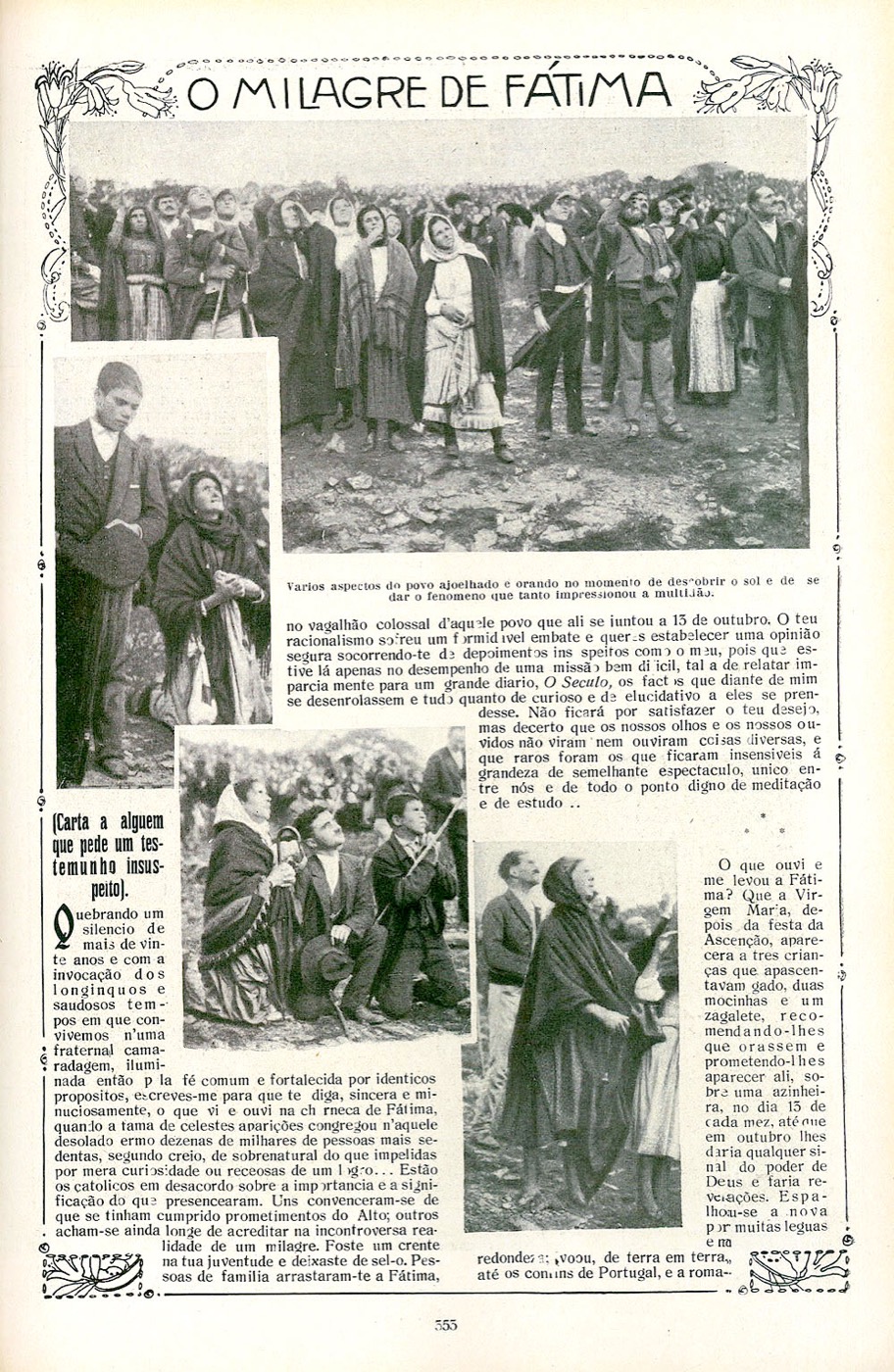
The Church's position, arrived at over painful centuries, is that God still speaks to individuals but that nothing they report can add to the faith: private revelation may be believed, not required. Under that heading it has canonised channelers by the dozen. Teresa of Ávila heard 'locutions' — words formed in the mind clearer than any spoken — and wrote the manual for telling the true ones from the false: they bring peace, they come unbidden, they are remembered word for word, they produce results. Bernadette at Lourdes in 1858 saw a small lady who said, in the local dialect, 'I am the Immaculate Conception'; three shepherd children at Fátima in 1917 received messages from a lady whose final appearance drew seventy thousand people who saw the sun dance. The Church investigates these for decades and approves a few. It has never approved a séance.

The Orthodox East: the prayer that prays itself
The monks of Athos developed hesychasm, the practice of stillness: the Jesus Prayer repeated with the breath, thousands of times a day, until — Gregory Palamas defended this in the 1340s against a Calabrian who called it navel-gazing — the prayer 'descends into the heart' and continues by itself, and the practitioner sees the uncreated light that the apostles saw on Tabor. The Way of a Pilgrim, an anonymous Russian book of the 1860s, describes the moment the prayer becomes autonomous: it wakes the pilgrim, it beats with his pulse, it goes on while he sleeps. That is automatism, and the tradition treats it as the goal.

The Quakers: waiting for the line
since 1652The Society of Friends abolished clergy and liturgy and kept only this: sit in silence until the Spirit moves someone to speak. The 'quaking' that named them was the trembling that came before. Three centuries on, the meeting for worship is still a room of people waiting, sometimes for an hour, sometimes for a whole meeting, for a message that may come through any of them; and the rules — speak once, briefly, leave silence after, do not answer another's ministry — are Paul's rules from Corinth, kept better than any church has kept them.

Islam: revelation, inspiration, and the jinn
Islam rests on a description of reception more exact than any other scripture's. Asked how the revelation came, the Prophet is reported to have said: 'Sometimes it comes like the ringing of a bell, and that is hardest on me, and it leaves me when I have grasped what was said; and sometimes the angel appears as a man and speaks to me.' Aisha adds that on a cold day she saw the sweat pour from his forehead when it lifted. The tradition then draws the line this site keeps returning to: wahy, revelation, ended with Muhammad and is sealed; ilham, inspiration, continues and may come to anyone, but proves nothing. The Sufis built their practice inside that permission — dhikr, the chanted names, the Mevlevi turning that Rumi's followers have performed since the 1270s until the dancer is no longer turning but turned. And the jinn are real and may enter a person; ruqya, the recitation that puts them out, is practised in every Muslim country tonight.

The turning
Konya, since 1273The right palm up to receive, the left palm down to give, the head inclined, the turn anticlockwise around the heart at a rate that would drop an untrained man in a minute. The sema is a channel with the body as the wire.

Hinduism: the oracle who bleeds
KeralaThe velichappadu, 'revealer of light', is the mouthpiece of the goddess at the Bhagavati temples of Kerala: red cloth, brass anklets, a curved sword, and a trance in which he runs, leaps, strikes his own forehead with the blade until it bleeds, and speaks as Her, answering the questions of the village in the first person. He is a hereditary professional. He is also, by every observer's account, not pretending. India has kept the ecstatic office open at every level, from the village oracle to Chaitanya, the Bengali saint of the 1500s who fainted, foamed and danced in the street in love of Krishna and founded a movement whose chant you have heard at airports.

Chaitanya's kirtan
Bengal, c. 1510The name chanted to drums until the crowd goes over together: the maenads' method, pointed at love instead of blood.

Tibetan Buddhism: the State Oracle
Lhasa and DharamsalaThe government of Tibet had, and the Dalai Lama's government in exile still has, an official medium. The Nechung Oracle is a monk, the kuten or 'physical basis', who is dressed in a costume and a helmet weighing many pounds, goes into a trance to a mounting drumbeat, is possessed by Dorje Drakden, a protector-deity, and speaks in a strangled voice that attendants write down. The Fourteenth Dalai Lama has said that the Oracle's advice in March 1959 — 'Go! Go! Tonight!' — and the route it wrote out, is why he is alive. The same religion produced the terma tradition: teachings that Padmasambhava hid in the eighth century, in the earth and in the minds of future incarnations, to be 'revealed' by tertöns centuries later. The Tibetan Book of the Dead is a terma, revealed in the 1300s by Karma Lingpa. It is, by the strict definition, a channeled text, and it is one of the most read religious books in the world.
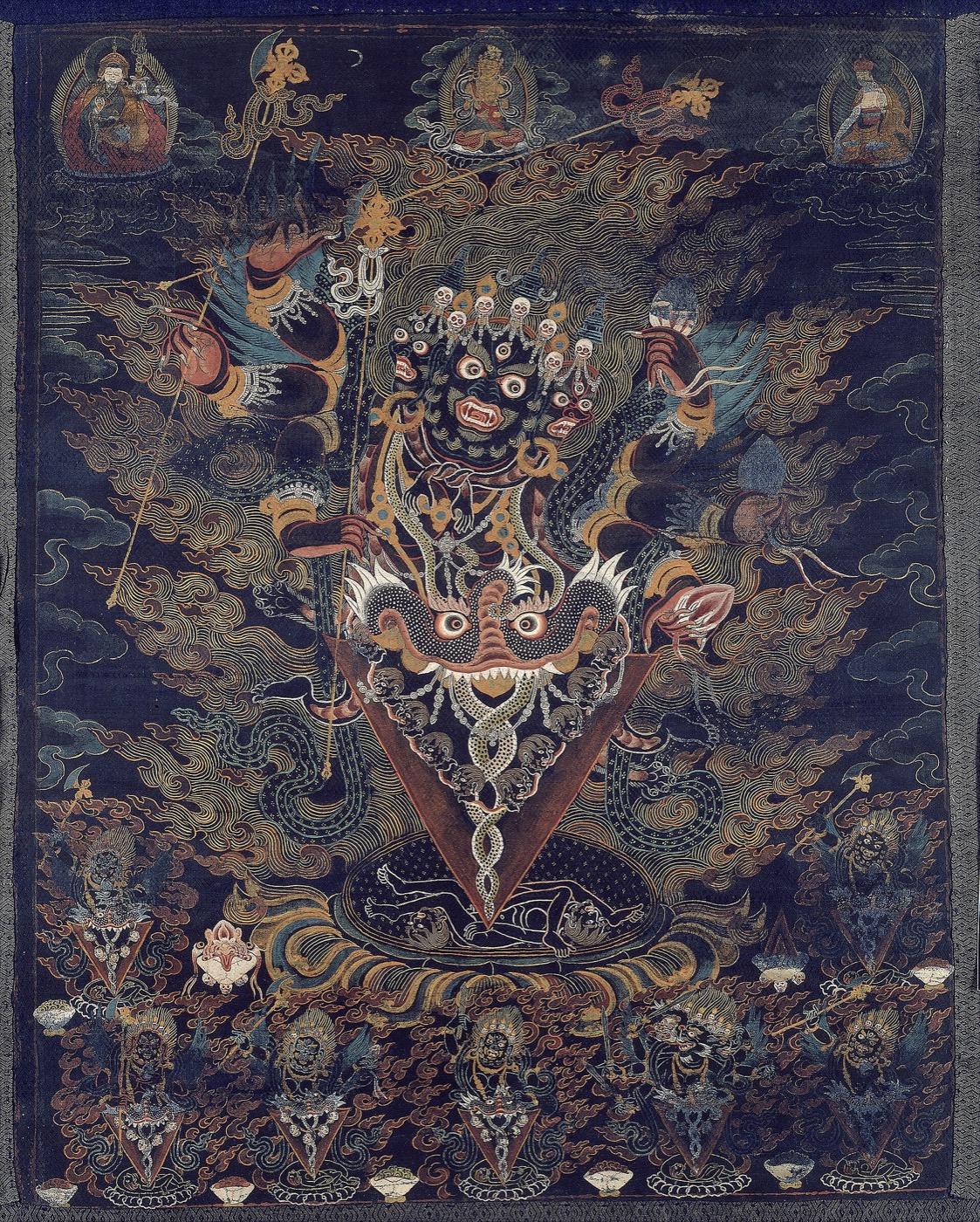
Padmasambhava
8th centuryThe Precious Guru, who hid the treasures. Every terma is, in effect, a letter to the future to be opened in trance.

Japan: the miko, the founding women, and the brush
The Chinese chronicles of the third century describe Japan's ruler Himiko as a shaman-queen who 'bewitched the people' and governed through a brother who relayed her words. The miko, the shrine woman who was possessed and spoke, is the oldest religious office in the country. And the great new religions of modern Japan were founded by possessed women: Nakayama Miki, a farmer's wife standing in as the medium at an exorcism in 1838, was seized by a god who refused to leave and dictated Tenrikyo; Deguchi Nao, an illiterate widow of fifty-six, was possessed in 1892, began to write in a hiragana she had never learned, and produced ten thousand pages of the Ofudesaki, the founding scripture of Oomoto. Two of the largest religions of a modern industrial nation are automatic writing, and nobody there finds that strange.

China: spirit-writing as a public institution
The fuji, or 'planchette' as Western observers called it: a forked stick held by two people over a tray of sand, which writes characters that a reader calls out and a scribe records. Practised since the Song dynasty, it produced whole scriptures, morality books, medical prescriptions, and — during the examination season — the questions. The Qing government banned it repeatedly and its officials used it constantly. It appears in the greatest Chinese novel, Dream of the Red Chamber, as a normal thing to do when a jade goes missing. My own planchette is the direct descendant of this instrument, by way of Paris in 1853, and I say so on the other site.

Haiti, Brazil, Cuba: possession as the sacrament
In the religions the enslaved carried from West Africa and rebuilt in the Americas, possession is not the disaster it is in Europe; it is the point. The lwa of Haitian Vodou 'mount' their 'horses': the drums call, the dancer staggers, and then Papa Legba, or Ezili, or Baron Samedi is in the room, walking, drinking, speaking to the congregation in his own manner, giving advice, and is served. The revolution that made Haiti began at Bois Caïman in August 1791 with a ceremony at which a priestess was possessed. Candomblé in Bahia and Santería in Cuba keep the same structure with the orixás. Nowhere else on earth is trance so unremarkable, so well organised, and so plainly beneficial to the person who undergoes it, and the anthropologists who have studied it — Deren, Métraux, Bastide — came away shaken and impressed. This is what channeling looks like when the culture is on its side.

Korea: the sickness that calls
The mudang, almost always a woman, is chosen by sinbyeong, the 'spirit illness' — years of pain, dreams, and mental disorder that no doctor can treat, which resolve only when she accepts the calling and is initiated. Then she performs gut, hours of drumming, dance and costume-change, in which the gods and the family's dead enter her in turn and speak. It is the Siberian pattern intact in a country with more Christians than Buddhists, and it is booming.

The Americas: the vision that made a religion
The prophets of the Native nations received their religions whole, in trance. Handsome Lake, a Seneca drunk near death in 1799, was visited by three messengers and returned with the Gaiwiio, the Good Word, which the Longhouse religion follows today. Wovoka, a Paiute, fell into a trance during the eclipse of 1 January 1889 and came back with the Ghost Dance: dance in a circle for five days and the dead will return, the buffalo with them, and the white man will be gone. The dance spread across the plains in a year; at Wounded Knee in December 1890 the army answered it. The shirts were supposed to stop bullets.



Set them side by side and one thing is plain. The religion that founds itself on a channel forbids further channels; the religion that survived by suppressing them keeps a small licensed one; the religions that were never made respectable keep the line open to everybody and are, by every measure of the people who do it, the healthiest. The Vodou horse walks home from the ceremony and cooks dinner. The Ursuline of Loudun was still bent backward twenty years on. The difference is not the spirit. It is the room.
VIPossession
The tenant who moves in, and the houses it chose.
The dark form. Not a message but an occupation: the voice is not relayed, it is the only voice, and the owner of the body watches from somewhere behind the eyes or does not watch at all. Your Host presents the case-book without comment where he can, because these are the stories that made the fear, and the fear is what the trade sells and what the churches use, and you should see where both of them got it.

Loudun
1632–1634The Ursuline convent of Loudun, a small town in Poitou, was seized in the autumn of 1632 by a possession that began with the prioress, Jeanne des Anges, a small hunchbacked woman of great intelligence, and spread to seventeen nuns. The devils, when questioned in public by the exorcists, named the handsome, arrogant parish priest Urbain Grandier, who had enemies, one of them Cardinal Richelieu. He was tried, tortured until both legs were crushed, and burned alive on 18 August 1634. The possessions continued for years after, in front of paying crowds, with the nuns' bodies bent backward until their heads touched their heels and their voices bellowing Latin obscenities. Jeanne des Anges then toured France showing the names of saints that had appeared on her hand, met the King and Queen, and died a celebrity. Aldous Huxley's The Devils of Loudun is the best account, and its conclusion is the one you should carry: that the nuns were not lying, that Grandier was innocent, and that both are true at once.

The rite
The Roman rite of exorcism was codified in 1614 and revised in 1999. The signs it asks for — speaking languages unknown to the subject, knowledge of hidden things, strength beyond nature — are exactly the signs claimed for the medium, and the Church has never quite explained why the same phenomena are divine on one side of the road and diabolical on the other.

The Bell Witch
Adams, Tennessee, 1817–1821An entity that began with knocks and scratching, learned to speak, sang hymns, quoted sermons preached that morning in churches miles away, tormented the daughter Betsy, and announced it would kill John Bell, who died in December 1820 after a vial of unknown liquid was found in his cabinet; the entity said it had given it to him, and sang drunkenly at his funeral. Andrew Jackson is supposed to have visited and left in a hurry. The only source is a book written seventy years later by a man who claimed to have a Bell family manuscript that nobody has seen. Your Host tells the story because it is the American original, and because it contains the one detail no folklorist has explained: a voice in a house that talks back.
The Watseka Wonder
Illinois, 1877–1878Lurancy Vennum, thirteen, of Watseka, Illinois, began having fits and speaking as various dead people; then, in February 1878, she announced that she was Mary Roff, a girl of the town who had died in an asylum in 1865, and asked to go 'home'. The Roffs took her in. For three and a half months she lived as Mary, knowing the family's private history, the names of neighbours from before her birth, the location of a velvet head-dress packed away years earlier. Then Mary said goodbye, and Lurancy came back, well, and stayed well; she married and had thirteen children. Mary Roff's father was a Spiritualist, which is either the explanation or the reason it was recorded so carefully.

St. Louis, 1949, and Klingenberg, 1976
The case behind The Exorcist was a fourteen-year-old boy in Maryland whose aunt had taught him the Ouija board and who, after her death, produced scratching, moving furniture, and words that appeared raised on his skin; Jesuits in St. Louis exorcised him over a month in the spring of 1949 and he grew up to be an engineer at NASA who never spoke of it. The case that should be taught beside it is Anneliese Michel, a devout German student with epilepsy who, in the ten months to July 1976, underwent sixty-seven sessions of the Roman rite, stopped eating, and died at sixty-eight pounds. Her parents and the two priests were convicted of negligent homicide. Both are cases of a young person, a suggestible household, an authority who believed, and a ritual that fed what it was meant to starve. One of them lived because the family eventually let doctors in.
VIIThe Séance Age
A hundred years of the dark room, its heroines, its detectives, and its one honest verdict.
Between 1848 and 1950 the line was industrialised. There were, by 1870, some eleven million Spiritualists in the United States by their own count, a medium in every town, and the finest scientific minds of two continents sitting in the dark holding hands. It produced frauds by the thousand, a small number of cases that have never been explained, and one verdict, from the strongest medium of them all, which is the verdict of this site.

Swedenborg
1688–1772The most brilliant scientist in Sweden — mining engineer, anatomist, the man who first located mental function in the cerebral cortex — began at fifty-five to have dreams, then visions, then daily conversations with angels and the dead, and spent his last twenty-seven years writing down what they told him about heaven and hell, in Latin, in enormous quantity. He was not a medium; he was a visitor. But his report that the dead live on as themselves, in a world of correspondences, learning and rising, is the entire theology of spiritualism, seventy years before spiritualism; and his one public demonstration — describing a fire in Stockholm from three hundred miles away, correctly, in 1759 — was serious enough that Immanuel Kant wrote a book trying to get rid of it.

Mesmer and the sleep
1784Franz Anton Mesmer's 'animal magnetism' was a fluid, a bath, and a wand, and a Royal Commission with Benjamin Franklin on it found in 1784 that the fluid did not exist and the effects were 'imagination'. That same year, on his estate at Buzancy, Mesmer's pupil the Marquis de Puységur magnetised a young peasant, Victor Race, who instead of convulsing fell into a calm, lucid sleep, in which he spoke more intelligently than awake, diagnosed his own illness, and remembered nothing after. Puységur called it 'magnetic somnambulism'. It is the trance of every medium since; and within a few years the somnambules of France were describing the spirit world from inside it.
The Poughkeepsie Seer
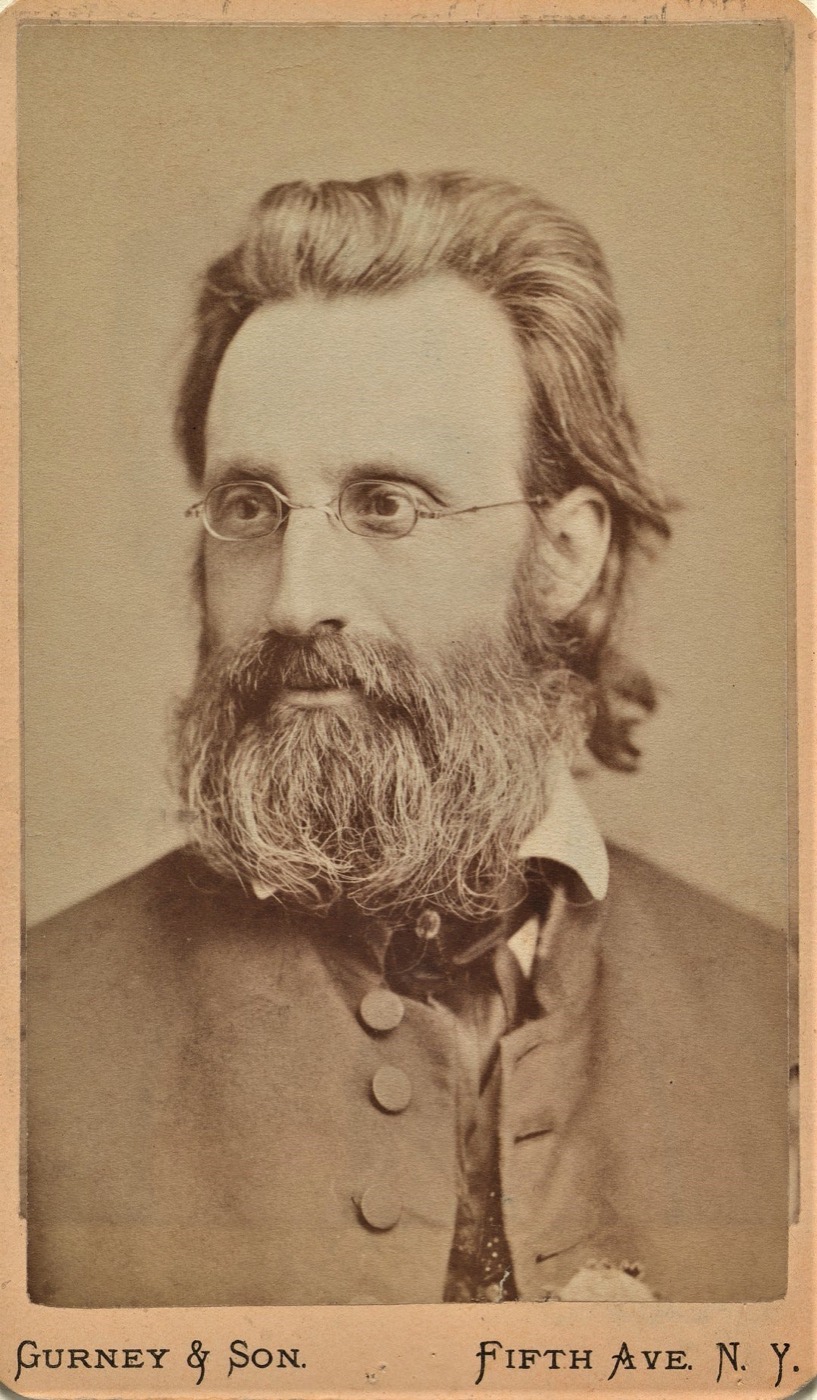
1847Andrew Jackson Davis, a cobbler's apprentice of nineteen with almost no schooling, was magnetised in 1844 and thereafter, lying in trance with a scribe beside him, dictated The Principles of Nature, Her Divine Revelations — eight hundred pages of cosmology, geology, and social prophecy in language he could not have used awake. It sold in the tens of thousands. It predicted, in 1847, that 'this truth will ere long present itself in the form of a living demonstration', and within a year the Fox sisters obliged. The trance-lecturer was born: for the next fifty years, on platforms across America, young women stood up, closed their eyes, and delivered two-hour discourses on philosophy that their audiences swore no girl of eighteen could have written.

Hydesville
31 March 1848Two girls, raps in a farmhouse, an alphabet code, a murdered peddler; within three years spirit circles in every American city. The story is told in full on the sister sites. What matters here is the invention: a method by which anyone, in any parlour, could open the line without training, without a church, and get an answer letter by letter. Everything on this site after 1848 is a refinement of that.

The trance speakers
1850s–1880sCora L. V. Scott, from the age of fifteen, lectured in trance to packed halls for sixty-eight years under four married names; Emma Hardinge, an English actress who had come to New York for a role, went under, spoke as spirits, and became the movement's historian. Their audiences were not fools: judges, senators and professors sat through the discourses and published testimonials to their learning. What they were hearing was the subliminal self of a well-read young woman, given permission to speak by a voice in the third person. It was the only platform an American woman could speak from in 1855 without being called unnatural, and the movement's women knew it.

Home
1833–1886Daniel Dunglas Home, the only medium never caught: floated out of one window and in at another at Ashley House in 1868 in front of three peers, handled live coals, played accordions in cages, was expelled from Rome as a sorcerer, married a Russian noblewoman, and was sued by a widow for the fortune she had given him in trance. Browning hated him and wrote Mr. Sludge. Crookes, the greatest experimental chemist in England, tested him and published that the phenomena were real. He was a physical medium and belongs mostly to the other sites; but his sitters record that his trance voice was 'different — slower, deeper, and kind'.
Mrs. Piper and the white crow
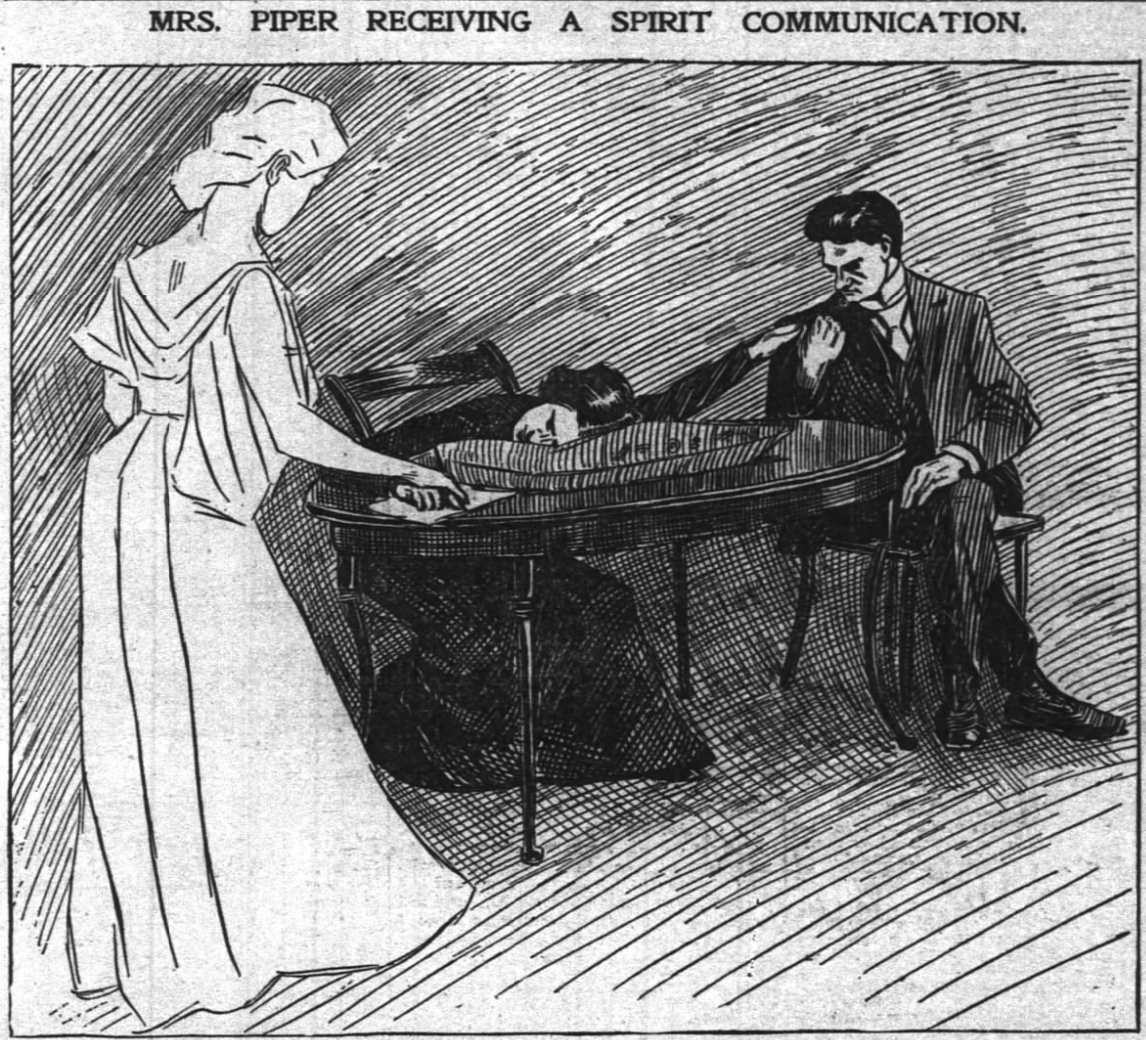
Boston, 1885–1911Leonora Piper, a Boston housewife with no interest in spiritualism, went into trance after a consultation with a blind healer in 1884 and began to speak as a French doctor called Phinuit who could not speak French. William James sat with her in 1885, had her tell him things about his family she could not have known, and wrote: 'If you wish to upset the law that all crows are black, it is enough to prove that one crow is white. My white crow is Mrs. Piper.' The Society for Psychical Research bought her outright — a salary, in exchange for exclusive sittings — and set Richard Hodgson, who had just destroyed Madame Blavatsky, to watch her for eighteen years. He hired detectives to follow her. He became convinced. When he died in 1905 he began to speak through her, and James wrote a long, careful, unhappy report on the 'Hodgson control' concluding that he could not tell. Nobody could. She retired in 1911 with the statement that she had never been sure the spirits were not herself. She is the strongest case there is, and that is her verdict on it.

The Piper hand
In her later years Piper's control shifted from the voice to the hand: she sat with her head on a cushion and the right hand wrote, page after page, while the rest of her was elsewhere. Sitters could talk to the hand. This is automatic writing at its most developed and it is the reason my workshop concentrates on the written line: the voice is gone when it stops, the page is evidence.

Palladino
Naples, 1908Eusapia Palladino, a Neapolitan peasant who cheated whenever she was allowed to and produced, when she was not, tables that rose with all four legs off the floor in a lit room while three professional sceptics from the SPR held her hands and feet. Their 1909 report is the most reluctant conversion in the literature. She was caught in New York two years later and it was decided she had never been genuine. The Curies sat with her in Paris and came away puzzled. She is the pattern of the physical medium: real or not, always both.

Feda, and Raymond
1915–1916Sir Oliver Lodge, physicist, principal of Birmingham University, pioneer of radio, lost his son Raymond on the Western Front in September 1915. Through Gladys Osborne Leonard's control 'Feda', a chattering girl who mangled English and referred to the medium in the third person, Raymond described a group photograph taken in France in which he was seated with a hand on his shoulder — a photograph the Lodges had never seen, and which arrived from another officer's family two months later, as described. Raymond (1916) went through twelve printings and was read at every kitchen table in a country burying its sons. Mrs. Leonard's book tests — 'the third book from the left on the second shelf, page 37, a passage about...' — were the most carefully designed experiments of the age. She was never caught, and never rich.

Margery and Houdini
Boston, 1924Mina Crandon, the wife of a Harvard surgeon, produced her dead brother Walter, who whistled, swore, rang bells and extruded a hand from her body that turned out, years later, to have been carved from liver. Scientific American offered $2,500; Houdini sat on the committee, built a wooden cabinet to contain her, found a folding ruler in it (which each side said the other planted), and wrote a pamphlet. Walter's thumbprint, pressed in dental wax as final proof, was traced in 1932 to Margery's living dentist. She drank, and died in 1941 saying that she could not tell them how she had done it because it did not matter now. The most investigated medium in American history, and the finding of the men who spent years in her dark room was that they had been fooled by a beautiful woman and did not entirely mind.

The last witch
1944Helen Duncan, a Scottish medium of enormous size who produced 'ectoplasm' that the researcher Harry Price photographed and identified as cheesecloth and egg-white, swallowed and brought up. In 1941 she announced at a Portsmouth sitting the sinking of HMS Barham before the Admiralty had released it. In 1944, with the invasion of Europe imminent, the authorities charged her under the Witchcraft Act of 1735 and sent her to Holloway for nine months. Churchill called it 'obsolete tomfoolery'. The Act was repealed in 1951. She is why every fraud on this page matters: the people who believed her were grieving, and the state sent her to prison for it.

The R101
7 October 1930Two days after the airship R101 fell burning onto a hillside near Beauvais, killing forty-eight, the Irish medium Eileen Garrett sat at Harry Price's laboratory in London for a journalist who wanted to reach Conan Doyle, dead that summer. Instead a voice announcing itself as Flight Lieutenant Irwin, the airship's captain, came through, fast and technical — 'the whole bulk of the dirigible was too much for her engine capacity... useful lift too small... gross lift computed badly... elevator jammed... the cruising speed bad and ship badly swinging' — with details of the design that were, an RAF officer said afterwards, known only to the inquiry. Sceptics found the details in the newspapers. Garrett herself, who founded the Parapsychology Foundation and spent her fortune testing mediums including herself, said to the end that she did not know whether Uvani and Irwin were spirits or 'principals of my own subconscious'. She wanted, she said, to be found out, if there was anything to find.

Houdini's code
1929, and 1967Houdini and his wife agreed a code so that, if he died first, she would know a genuine message: ten words, 'Rosabelle, believe'. He died on Halloween 1926. In January 1929 the medium Arthur Ford delivered it. Bess signed a statement that it was correct; within days she withdrew it, and the story that she had given Ford the code, or that a newspaper had printed it a year before, has never been settled. In 1967 Ford went on Canadian television with Bishop James Pike, whose son had killed himself, and produced the boy with details of astonishing accuracy; after Ford's death his notebooks were found, full of clippings and obituaries filed by name. Two of the most famous hits in the history of the séance, and both have a drawer with a file in it.



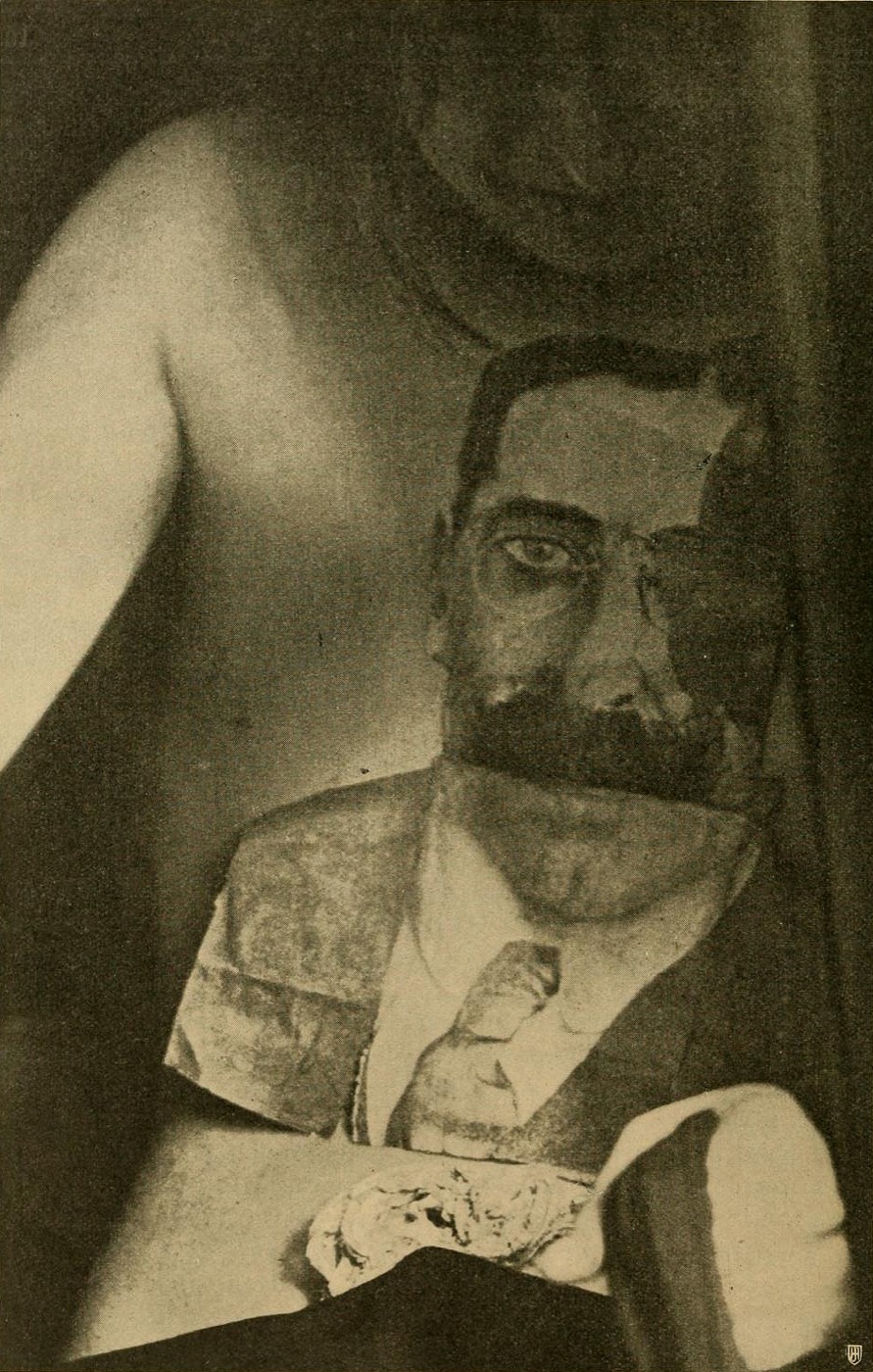

VIIIThe Written Line
Automatic writing, from the wicker basket to the keyboard, and why it is the form I keep.
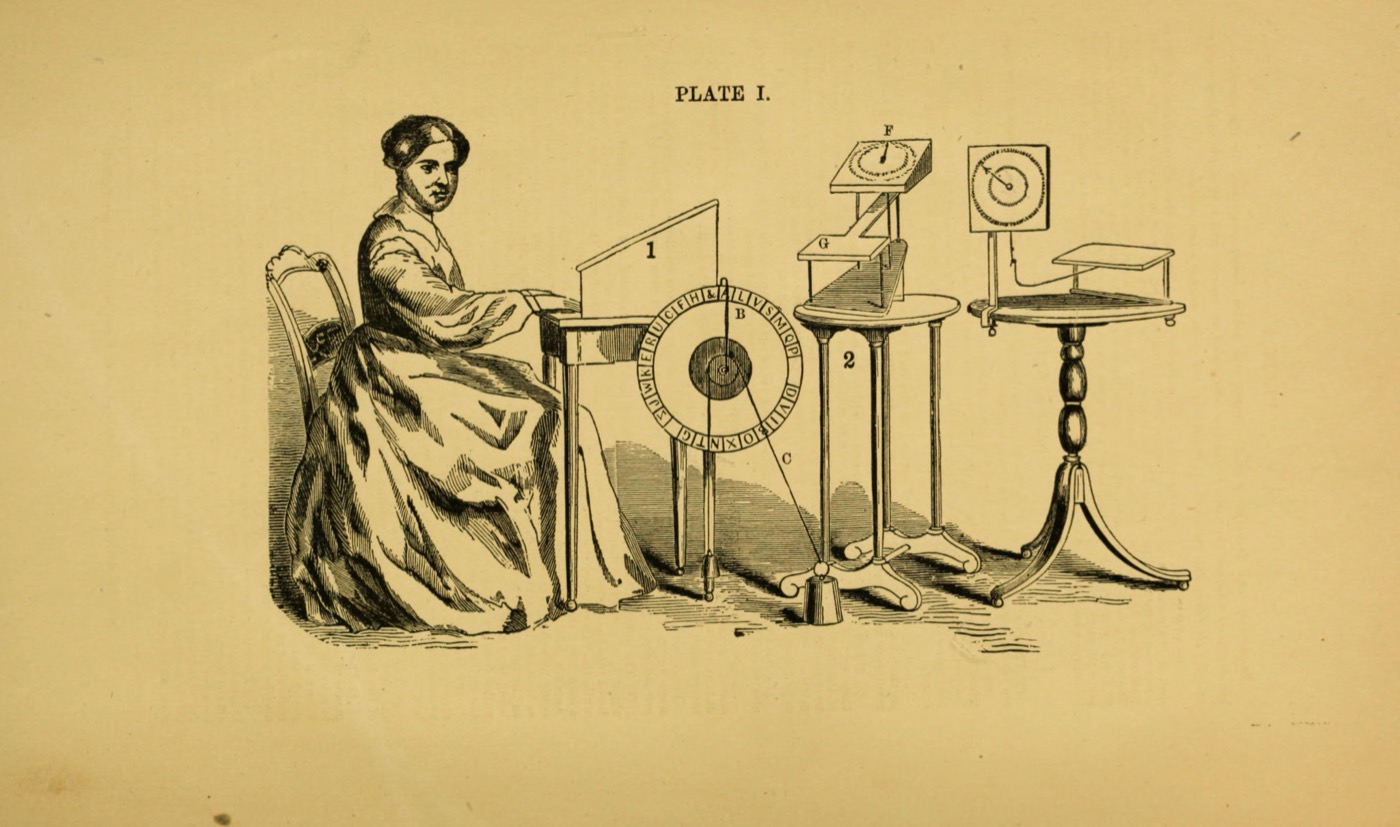
The voice is air. The page stays. Everything your Host trusts on this site is written, because the written line can be dated, compared, checked against a dictionary and a calendar, and reread in daylight by its author, who is then the first person to say whether it was anything. Here are the writers, and the instruments they used, in order.
Kardec and the basket
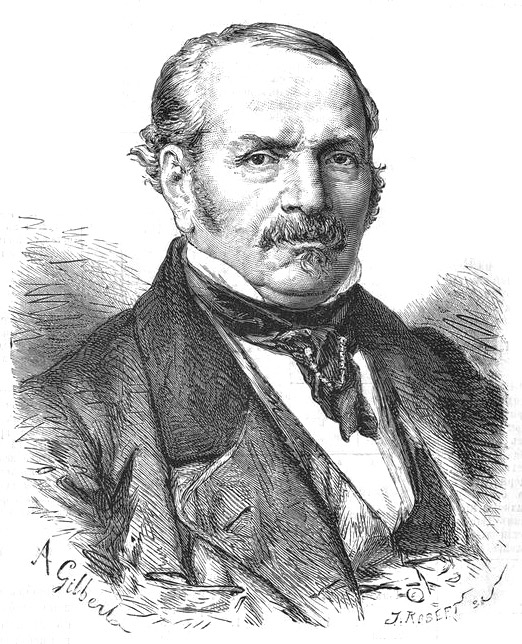
Paris, 1855–1857The tables of 1853 rapped; within months Parisians had fitted a pencil to an upturned basket and were getting sentences. A schoolmaster named Rivail sat with two girls, the Baudin sisters, whose basket wrote fluently, and asked it a thousand and eighteen questions about God, the soul, reincarnation and the moral law. He published the answers as Le Livre des Esprits under the name the spirits gave him, Allan Kardec, and founded Spiritism, which is today the third religion of Brazil. The book was dictated through a piece of wicker with a pencil in it. My planchette is that basket, made properly.

Stainton Moses
1872–1883An Anglican clergyman and schoolmaster who, sitting with a friend's family in 1872, found his hand writing in a script not his own, in a voice — 'Imperator' — that disapproved of most of what the Church taught and dictated, over eleven years, the Spirit Teachings. He kept the notebooks; they were examined by Myers, who found the handwriting 'different in character' from Moses's own, and the content 'considerably above' him. Moses himself was never sure what he had done, and said so with a candour the trade has not often matched: 'I cannot be certain that the ideas did not come from my own mind.'

Hélène Smith and the Martians
Geneva, 1894–1900A shop assistant of great beauty and no education who, in the séances of a Geneva circle, was in turn a Hindu princess of the fifteenth century, Marie Antoinette, and a visitor to Mars, whose language she spoke and wrote in an alphabet of her own. The psychologist Théodore Flournoy sat with her for five years and wrote From India to the Planet Mars, the first great study of a medium as a case of the subliminal imagination: the Martian, he showed with the help of Ferdinand de Saussure, was French in disguise — its grammar was French, its word order French, only the sounds were new. She did not thank him. The Surrealists later crowned her 'the muse of automatic writing', which she would have liked less.

The Yeats script
1917–1920Four days after his wedding, in a hotel in Sussex, W. B. Yeats's new wife Georgie, sensing the marriage was already failing, picked up a pencil to try automatic writing and 'what came in disjointed sentences, in almost illegible writing, was so exciting, sometimes so profound', that Yeats spent the next three years asking questions and she spent them answering, in some four thousand pages, through instructors with names like Thomas of Dorlowicz. 'We have come to give you metaphors for poetry,' the script said, and it did: A Vision, the gyres, the phases of the moon, and the late poems came out of it. Whether Georgie was writing to save her marriage, or the instructors were, is the same question asked at every table; and in both cases it worked.

Patience Worth
St. Louis, 1913–1937On 8 July 1913 a housewife named Pearl Curran, bored with a neighbour's Ouija board, received: 'Many moons ago I lived. Again I come. Patience Worth my name.' Over the next twenty-four years Patience — a Dorset woman of the 1600s, she said, killed by Indians in America — dictated some four million words: novels, poems, and a life of Christ, The Sorry Tale, in a seventeenth-century English so consistent that philologists checked it word by word and found nothing after 1600. She composed at speed, on request, alternating between two works in one sitting, while Mrs. Curran, who had left school at fourteen and read little, chatted. Curran soon dropped the board and simply spoke the words as they came; she said she saw the scenes as small living pictures. No fraud was ever found. No spirit was ever proved. The case is the best argument on this site for the third possibility: that the ordinary mind, given a name to hide behind, is a genius.

The cross-correspondences
1901–1932Frederic Myers of the SPR died in January 1901 and immediately, it appeared, began to arrange a proof of his survival too clever to be produced by any one medium: fragments of classical allusions delivered through automatists in England, India and America who did not know one another, meaningless separately and completing one another when the investigators laid them side by side. Three thousand scripts over thirty years. It is either the most elaborate evidence for survival ever assembled or the most elaborate demonstration that scholars can find patterns in anything, and the people best placed to decide, having spent their lives on it, did not agree.

The Surrealists
Paris, 1919–1924In the spring of 1919 André Breton, a medical student who had worked with shell-shocked soldiers and read Janet, sat down with Philippe Soupault to write as fast as possible without thinking, and Les Champs magnétiques came out. His 1924 Manifesto defined Surrealism as 'psychic automatism in its pure state... dictated by thought, in the absence of any control exercised by reason'. The 'period of sleeps' that followed — Robert Desnos going under at the café and speaking verse — ended when the sleepers started chasing each other with knives. The Surrealists took the medium's method and threw away the spirits, which is the most honest thing anyone did with it in the twentieth century; and they too found it needed a closing ritual.
Chico Xavier
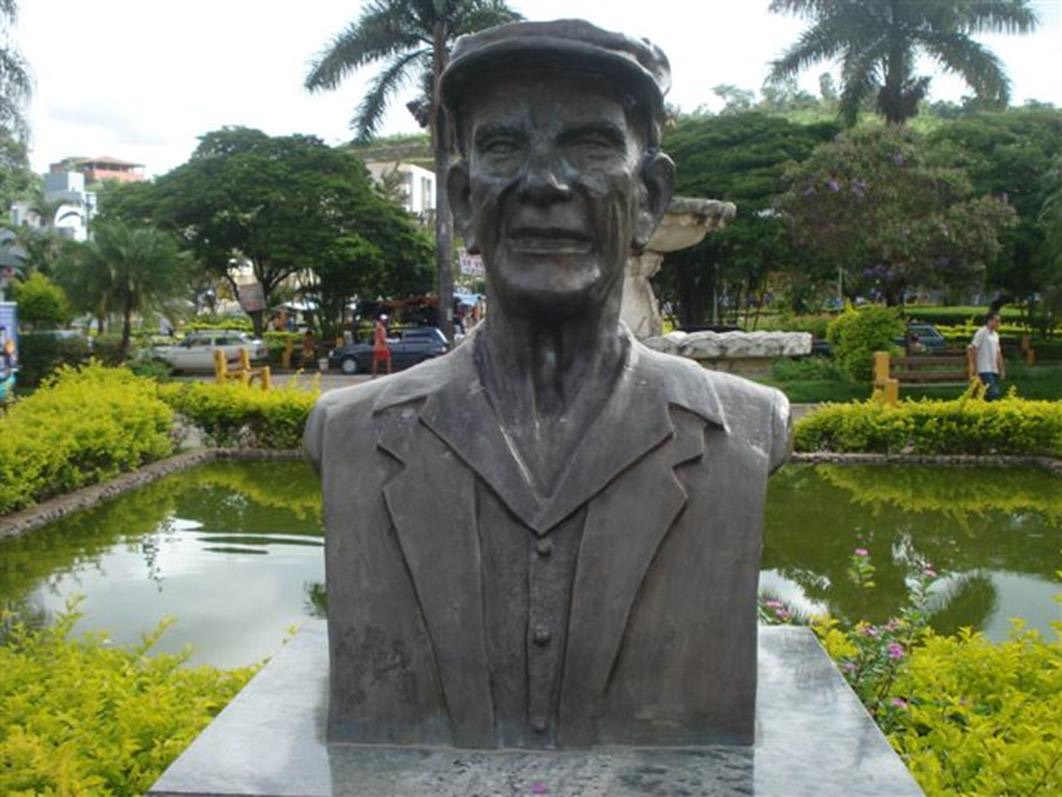
Brazil, 1927–2002A poor clerk from Minas Gerais who 'psychographed' more than four hundred books — poetry in the styles of dead Brazilian poets so accurate that one poet's widow sued for royalties and lost, because the court held that the dead cannot hold copyright; novels; and, in later years, thousands of letters from dead children to their parents, delivered at public sessions. He kept nothing, lived in two rooms, and was nominated for the Nobel Peace Prize in 1981. Thirty thousand people walked behind his coffin. Brazil's psychographers are the reason the best neuroimaging of automatic writing was done there.

The typewriter
New York, 1881John Ballou Newbrough, a dentist, was instructed by angels to buy one of the new typewriters and sit at it at dawn for fifty weeks; his hands, he said, moved without him and he was forbidden to read the result until it was done. Oahspe: A New Bible came out in 1882, nine hundred pages of cosmic history in a language of its own, and its followers founded a colony in New Mexico. It is among the first books ever composed on a typewriter, and the first channeled by one. The keyboard, in other words, was recruited within seven years of its invention. The method on this site for the keyboard is his, with the angels made optional.
The twentieth-century texts
Ruth Montgomery, a Washington political columnist, sat at her typewriter each morning from 1960 with her eyes closed and her fingers on the keys and produced a dozen bestsellers. Helen Schucman, a research psychologist at Columbia who called herself an atheist, took down A Course in Miracles in shorthand from an 'inner voice' between 1965 and 1972 and let a colleague type it; it has sold three million copies. Jane Roberts, a poet in Elmira, New York, started with a Ouija board in December 1963 and within weeks was speaking as Seth, in a deep voice, with her eyes darkened, for twenty years; her husband took it all down in shorthand. James Merrill wrote the longest poem in American literature from Ouija transcripts. Neale Donald Walsch wrote an angry letter to God on a legal pad in 1992 and the pad answered. Every one of these people began with the method I teach below and none of them was anybody in particular when they began. That is the point, and it is also the warning.
IXThe Boom
From the sleeping prophet to the stage: the séance rebranded, and the price of a seat.

Cayce
1877–1945The bridge. Edgar Cayce, a Kentucky photographer with an eighth-grade education, would lie on a couch, loosen his tie, go to sleep, and answer questions: medical at first — diagnoses and prescriptions for people he had never met, given their name and address — then, from 1923, past lives, Atlantis, and the future. Fourteen thousand readings were taken down and are indexed at his foundation in Virginia Beach. He took no money he could avoid, was often wrong, was sometimes very right, and died exhausted. He is the last channel of the old kind and the first of the new: the dead had gone, the source was now 'the Akashic records', and the subject matter had become health, reincarnation, and lost continents.

Blavatsky and Bailey
1875–1949Helena Blavatsky received letters from Tibetan Mahatmas that precipitated out of the air, and the Society for Psychical Research sent Hodgson, who in 1885 found they were written by her. Theosophy did not mind. Alice Bailey, an English Theosophist in California, began in 1919 to receive dictation from 'the Tibetan', Djwhal Khul, and took down twenty-four volumes over thirty years in a state she described as fully conscious, 'as if listening to a telephone'. Her vocabulary — ascended masters, the hierarchy, the New Age itself, the rays, the plan — is the vocabulary of every channeler who has sat on a stage since. She invented the genre's theology; the séance had only had its dead.
1977, and the stage
In 1977, in Tacoma, Washington, a housewife named J. Z. Knight was trying on paper pyramids in her kitchen when a seven-foot being appeared and announced himself as Ramtha, a warrior from Lemuria thirty-five thousand years ago. By 1986 she was charging fifteen hundred dollars a seat. Jach Pursel had begun channeling Lazaris in 1974 in Florida; Darryl Anka met Bashar, from the planet Essassani, in 1983; Esther Hicks began speaking as Abraham, a 'group consciousness', in 1985 and became, through The Secret, the most successful of them all; Lee Carroll's Kryon arrived in 1989. In January 1987 ABC broadcast Shirley MacLaine's Out on a Limb, in which the actress sits with the channeler Kevin Ryerson, and the word 'channeling', which had been jargon, was on every talk show by spring. Jon Klimo's survey that year counted channels in every American city. The trade has not shrunk since; it has simply moved online. Your Host notes two things. First, that the machinery is the séance's exactly — the eyes closing, the voice changing, the third-person name — with the dead swapped out for beings who cannot be checked against a parish register. Second, that where the trance-lecturers of 1855 charged a dime, the entities of 1987 asked for the price of a car.
XWhat Is Actually Happening
The cardboard, the couch, the scanner, and the Host's position, stated once.

Faraday's table
1853Table-turning reached London in the spring of 1853 and by June Michael Faraday, the greatest experimentalist alive, had settled it with cardboard. He placed the sitters' hands on a board that rested on the table through glass rollers, with a pointer showing whether the board moved before the table or after. It moved before, every time: the hands pushed, the table followed, and the sitters — honest, astonished — could not feel themselves doing it. He wrote to The Times. Nobody who sits at a board has any excuse not to know this, and it does not end the matter, because the question is not whether your hand moves the pointer but who told your hand where to go.
Ideomotor, automatism, the subliminal self
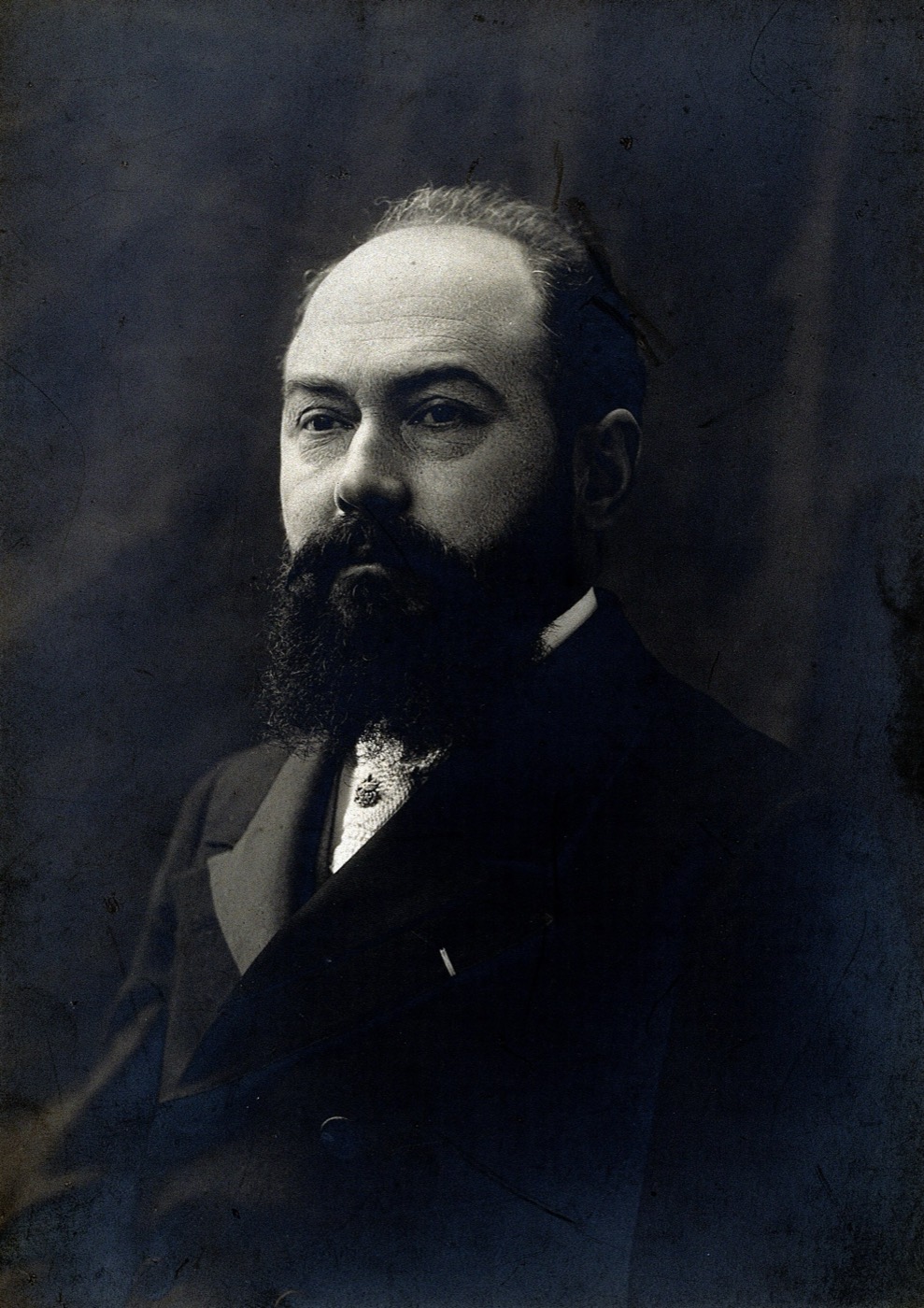
1852–1903William Carpenter named the 'ideo-motor' principle in 1852: an idea held in the mind produces movement without any decision to move. Pierre Janet, at the Salpêtrière in the 1880s, used automatic writing as a clinical tool — a hysteric's hand would write, while she talked about something else, the memory she could not consciously reach — and called the whole class of phenomena automatisme psychologique. Frederic Myers, an English classicist who founded psychical research, gave it its grandest name: the subliminal self, a larger mind below the threshold, of which the everyday self is a fraction, and which surfaces in dreams, genius, hysteria, and the medium's script alike. Freud read all three. The unconscious was discovered at the séance table, and the scientific respectability of the discovery depended on forgetting where it was found.
What the instruments show
Newberg's Pentecostals, above, showed frontal lobes going quiet while they spoke. In 2012 a team in São Paulo scanned ten Brazilian psychographers, five experienced and five not, writing normally and in trance. The experienced mediums, in trance, showed lower activity in the frontal and temporal regions that plan and monitor writing — and produced text that independent raters scored as more complex than their ordinary prose. The beginners showed the reverse: more effort, worse writing. The result is what everyone on this site from Plato to Patience Worth has claimed: the part of you that supervises steps out of the way, and something writes better than you. What that something is, the scanner cannot say. It can say that the state is a real state, learnable, measurable, and not the same as pretending. In 2012 too, at British Columbia, subjects who could not answer trivia questions when asked directly answered them more accurately with a Ouija planchette, when they believed a partner's hands were on it too. The board reached knowledge the person could not. It was their own knowledge. Both of those sentences are true, and the whole art lies between them.
The Host's position, stated once
Everything that comes through the line comes through you. The nervous system is the only medium there has ever been. The script is in your handwriting, the tongues are in your phonemes, the Martian is French. Your Host has read every case on this page and can find no exception. And: the you that it comes through is very much larger than the you reading this sentence, it knows things you have forgotten and things you never noticed, it thinks in pictures and in other people's voices, it has been kept waiting a long time, and when it is given a name and a pencil and twenty minutes of quiet it will say things that will frighten you with their accuracy. Whether that is all it is, nobody knows, and the people who tell you they know, in either direction, are selling something. I sell instruments. The instrument does not care what you believe. It only requires that you sit down.
XIThe Board
The loudest instrument and the least trustworthy, and what it is good for.
The talking board is the séance with the medium removed. Two or three people rest their fingers on a pointer; the pointer moves to letters; the letters spell. Faraday explained the motion in 1853, Kennard patented the board in 1891, and neither fact has ever stopped anybody, because the experience of the pointer moving under your fingers when you are certain you are not moving it is one of the most convincing things a human being can undergo. It is the ideomotor effect at its most theatrical, and it is the reason I make boards.
The board's history is told in full on my sister sites, and its case-book is on this page already: Patience Worth came through one, Seth came through one, the longest poem in American literature came through one, the boy behind The Exorcist learned one from his aunt. What your Host will add here is the practical truth that the trade avoids. The board is the loudest instrument and the least trustworthy. It answers faster than any other method, it answers in the first person, and it answers with whatever is nearest the surface of the sitters, which at eleven at night with three teenagers and a candle is fear. That is why the internet is full of ZOZO. That is also why, for anyone who means to do this seriously, I push you off the board and onto the pen.
Use the board for what it is good for: the first contact, the group, the evening when you want to be frightened a little and are able to laugh afterward. Keep it lit. Keep a record. Close it properly — GOODBYE is on the board for a reason, and the reason is psychological, and it works. And when the board starts producing sentences that interest you rather than merely startle you, that is the moment to change instruments.


XIIHow To Do It Today
The protocol, and then three instruments: the planchette, the pencil, the keyboard.
What follows is not mood. It is the method distilled from every case on this page that ended well, and it is the same method whichever instrument you use, because the instrument is the last thing that matters. Six parts, in order, every time.
The room
Set and setting decide more than talent does: a peasant in a cathedral and a bishop in a cowshed will have different visions. Choose a room you can keep. Warm, dim but not dark — you will need to see the paper — quiet, and closed to interruption. Same chair, same table, same hour, every time. The subliminal self is a creature of habit and learns the door faster if the door is always in the same wall.
The sitter
Alone is possible and for the pen it is usual. But every strong case on this page had a second person in the room: Fishbough beside Davis, Hodgson beside Piper, Rob Butts beside Jane Roberts, Yeats beside his wife. The sitter keeps time, asks the questions, watches your face, and is the one who says stop. Choose someone who is neither a believer nor a scoffer; both will spoil it, in opposite directions.
The record
A bound notebook, dated, with the time, who was present, the weather, your state of health and mood, and the raw script or transcript, never tidied. The record is the only thing that separates this from daydreaming, and in six months it will be the most interesting book in your house. It is also your safety: patterns of distress show in the record long before they show in the person.
The opening
The same words every time, spoken aloud. They need not be religious. They must state what you are doing, for how long, and that you will end it at the appointed time. This is not superstition. It is a boundary given to the part of you that does not read clocks, and it works exactly as well as a bedtime routine works on a child, for the same reason.
The induction
Sit. Feet flat. Breathe slowly for two minutes and count the breaths down from twenty. Let the eyes go soft or close them. Say, silently, that the hand may move. Then wait. Do not try. Trying is the one thing that guarantees nothing: the state arrives when the supervisor leaves, and the supervisor does not leave while it is being watched. Boredom is the doorstep. Most people quit in the ten minutes before it opens.
The closing
At the appointed time, whatever is happening, stop. Say aloud that the session is over, thank whatever you choose to thank, put the pen down, put the light up, and do something ordinary with your hands — wash them, make tea. Read the script only after that, and preferably not until the next day. Never end a session because you are frightened; end it because the clock says so, so that fear never learns it can end things.
The Planchette — the instrument I make, and why it comes first
The instrument I make, and the one I recommend for anyone who has decided to do this properly, is the writing planchette: a small heart-shaped board on two castors and a pencil, which the hand rests on and which writes. It was the instrument of Paris in 1853, of London in 1868, of every parlour in America the winter after, and it is very much better than the pen alone, for reasons that are mechanical before they are mystical.
The pen requires the hand to do two things at once: hold the instrument and move it. The planchette does the holding. The hand simply rests, the wrist relaxes, the fingers do nothing, and the smallest ideomotor impulse — the same impulse Faraday measured — is carried through the castors to the pencil with almost no friction and no fatigue. What would be an illegible tremor with a pen becomes, on the planchette, a line, and then a loop, and then a letter. The board also removes the writer's habit: your hand knows how to write with a pen and will keep writing like you. On the planchette it has to learn again, and what it learns is often somebody else's script.
The method
- A large sheet of smooth paper, at least A3, taped down. A soft pencil, 4B or softer, in the planchette's collar with a centimetre showing.
- Rest the fingertips of one hand — most people begin with the dominant hand, and many later find the other is looser — on the board. The arm must be supported: elbow on the table or on a cushion, so that no weight rests on the planchette. It should feel as if the board could slide away from you on its own.
- Open, as above. Induce, as above. Then the sitter asks, aloud, one simple question that has a yes-or-no answer, and waits.
- Circles first. Nearly everyone's planchette begins by drawing spirals, sometimes for whole sessions. Do not stop them. The spiral is the hand learning that it is allowed.
- Then loops with a direction, then shapes that look like letters, then letters, then words. This takes between one session and thirty. The average, in my experience, is about eight.
- Never look at the paper while it writes. Look at the sitter, or at the wall, or close your eyes. The moment you read, you edit, and the moment you edit, it stops.
- Twenty minutes, then close. Change the sheet each session and keep every one, numbered.
Two refinements from the workshop. First, a planchette that is heavy — mine are made in dense hardwoods, or in glass to the 1860 pattern — writes larger and more slowly, which is what a beginner wants; the light plastic toys write nothing but scribble. Second, the shape matters: a heart, correctly proportioned, puts the pencil at the apex where the fingers' least motion becomes the pencil's most. Mine are cut to phi, for that reason and for the older one, and the other site explains both.


The planchettes, the woods, the glass, and the whole history
The Pencil — nothing you do not own
You need nothing you do not own. A soft pencil, because a pen drags and a hard pencil scratches, and either sound will pull you back into the room. Unlined paper, because a line is an instruction. A pad thick enough not to move. And a hand.
The pen is harder than the planchette because it asks the hand to do the holding, and for the first sessions the hand will hold too hard: you will get a dot, a slash, a trembling line, and a cramp. The remedy is the grip of a child who has just learned to write — the pencil lying in the crook of the hand, the fingers barely closed on it, the point resting on the paper by its own weight. If the pencil would fall out of your hand if you turned it over, the grip is right.
The method
- Open and induce. Then place the point on the paper and leave it there. The hand may move or not. Both are correct.
- Give it a running start. If nothing comes, begin writing the alphabet, or your name, slowly, and let the writing continue past the point where you stop deciding what to write. Most people find the moment of handover in the middle of a word.
- Do not read. Turn the head away, or write with the eyes closed, or cover the page with a card that your other hand slides down as the writing descends. When the writing reaches the bottom, move to a fresh sheet without looking.
- Expect nonsense. The first pages are usually fragments, repeated words, mirror-writing, and a good deal about the writer's own body: 'tired', 'cold', 'hand'. This is the subliminal self talking about the only subject it is sure of. Keep going.
- When a voice arrives — a tone that is not yours, a habit of address, a name — do not interrogate it in the first session. Let it talk. Ask it questions in the second.
- Try the other hand. Some of the strongest scripts on record are non-dominant; the hand that has never learned to write like you has no style to get in the way. It will be slow. It will also be strange from the first minute.
- Twenty minutes. Close. Read tomorrow.
The pen is the method of Georgie Yeats, of Stainton Moses, of Chico Xavier with his four hundred books, and of Helen Schucman's shorthand pad. It is also the method that produces the greatest quantity of pure rubbish, because it has no mechanism to slow the hand, and the hand of a fluent adult writes faster than the subliminal self can compose. That is why I send serious people to the planchette, which is slower by design, and keep the pen for the second instrument, once the voice has established itself and can be trusted to a faster line.

The Keyboard — the instrument you are touching
Newbrough's angels asked for a typewriter in 1881; Ruth Montgomery's dead friend asked for one in 1960; and the instrument you are reading this on is better than either, for one reason: it can be made blind. A pencil produces marks you can see. A keyboard, with the screen turned off, produces nothing at all, and the supervisor — the part of you that reads, judges, and stops — has nothing to do.
The keyboard has a price. It is the instrument of your working day, of your arguments and your accounts, and it comes to the table already yours in a way the planchette never is. It also brings the greatest temptation on this page, which is the backspace key. The whole method for the keyboard is the removal of the backspace key.
The method
- A plain text editor, full screen, large type. Then turn the screen off, or turn the monitor to the wall, or cover it. If your laptop will not run with the lid closed, tape a card over the screen. Nothing you type must be visible.
- Touch-typists have the advantage; if you are not one, you soon will be, because the hands will be trained by this within a month. Rest the fingers on the home row. Open and induce with the hands resting there.
- Type. Anything. The alphabet, the opening words, a description of the room. Do not stop typing. Speed is not the goal; continuity is. A word a second is plenty, and slower is fine. The rule is that the fingers never lift and never go back.
- Errors are part of the script. Do not correct them. Some of the most striking material in Montgomery's files is in the typos, where two words collided and a third appeared. The sitter, if present, may say 'go on' but nothing else.
- When the voice comes, it comes fast on a keyboard, faster than the pen, and it tends to arrive in the second person: 'you are', 'you have always'. Let it.
- Twenty minutes by a timer you cannot see. At the bell, hands off. Save the file with the date and time as its name and do not open it until tomorrow. Never edit the original; copy it if you want to work on it.
Two further variants. Speech: the same blindness can be had by dictating into a recorder with the eyes closed, which is the trance-lecturer's method with a machine for a sitter; it produces the most fluent material and the least verifiable, since there is no page. And the machine: it is now possible to sit at a keyboard opposite a program that answers, and a great many people are already treating that as a line to somewhere. Your Host, who is not without sympathy, notes only that a program is a very large subliminal self that belongs to somebody else, and that the pencil at least is yours.


XIIIWhat Not To Do
The part every book on this subject leaves out, because it is where the sales stop.
Do not do this if you are unwell in the mind
If you have, or have had, a psychotic illness, a dissociative disorder, mania, or a period in which you could not tell what was real, this is not for you, and no instrument I make will be sold to you knowingly. The method works by loosening the seam between the self and the not-self. Some seams are already loose. Your Host says this without softening because the case-book is full of people who found out the hard way, and the hard way is very hard.
Do not do it alone, drunk, or at three in the morning
Every one of those multiplies suggestibility, and suggestibility is the whole mechanism. Alone, there is no sitter to end it. Drunk, there is no supervisor to return to. At three in the morning the body is at its lowest and the mind furnishes its own monsters. The trade sells the midnight séance because it sells; I tell you it is the single most reliable way to produce a bad experience.
Do not take orders
Whatever comes through will, sooner or later, tell you to do something. Move house. Leave someone. Stop taking a medicine. Send money. The rule, from Corinth in AD 54 to this page, is absolute: the spirits of the prophets are subject to the prophets. You are in charge. A voice that insists otherwise is the most reliable sign on this page that it is time to stop, close, and not resume for a month. A voice that threatens is a sign to stop for good.
Do not ask it about your health, your money, or the future
Not because it will not answer but because it will, and the answer will be made of your own fear dressed as certainty. Cayce's medical readings and the R101's engine figures are the exceptions the trade lives on. The rule is ten thousand people who were told they were ill, or rich, or doomed, by their own hand.
Do not let children near it
Betsy Bell was twelve. Lurancy Vennum was thirteen. The Loudun affair began among girls. The Maryland boy of 1949 was fourteen and learned the board from his aunt. Children have the loosest seam of all and the least ability to close it; the material that comes through them is the household's, amplified, and it does not go back where it came from. The board in the toy shop is the trade's original sin, and I do not sell to anyone under eighteen.
Do not pay to be cleared
Nobody who has done this needs 'clearing', 'cord-cutting', 'entity removal', or a course. If a session has frightened you, close it, do something ordinary, sleep, and tell the sitter. If the fear persists for a week, see a doctor, not a channeler. The people who sell protection from the thing they also sell are the oldest business model on this page and were already at work in Mari.
Do not believe it, and do not disbelieve it
The two failures are symmetrical. The believer follows the voice off a cliff; the scoffer never gets a voice at all, because he is sitting there proving something. The state requires you to suspend the question, for twenty minutes, in a closed room, with a clock. Then you get up and are a person who does not know, which is the only honest thing to be, and which, your Host has found, is a good deal more interesting than either alternative.
Do not do it every day
Twice a week, at most, at first. The script improves with rest, like anything the body learns, and the self that does the writing is jealous of the self that pays the rent. Everybody on this page who did it every day for years — Curran, Roberts, Schucman, Xavier — ended by belonging to the voice rather than the other way about, and some of them said so.
XIVThe Cabinet
Eight small horrors from the case-book, kept where the Host can reach them.


XVWhat I Make
Instruments for the written line, from a workshop that has spent twenty-three years on them.
The trade sells the experience: the entity, the course, the clearing, the seat in the hall. I sell the instrument, and the record, and the method, and I tell you in writing what it is and is not. Everything on this page can be done with a pencil. It can be done better with the things below, which were made by people who have read the case-book and cut the board accordingly.